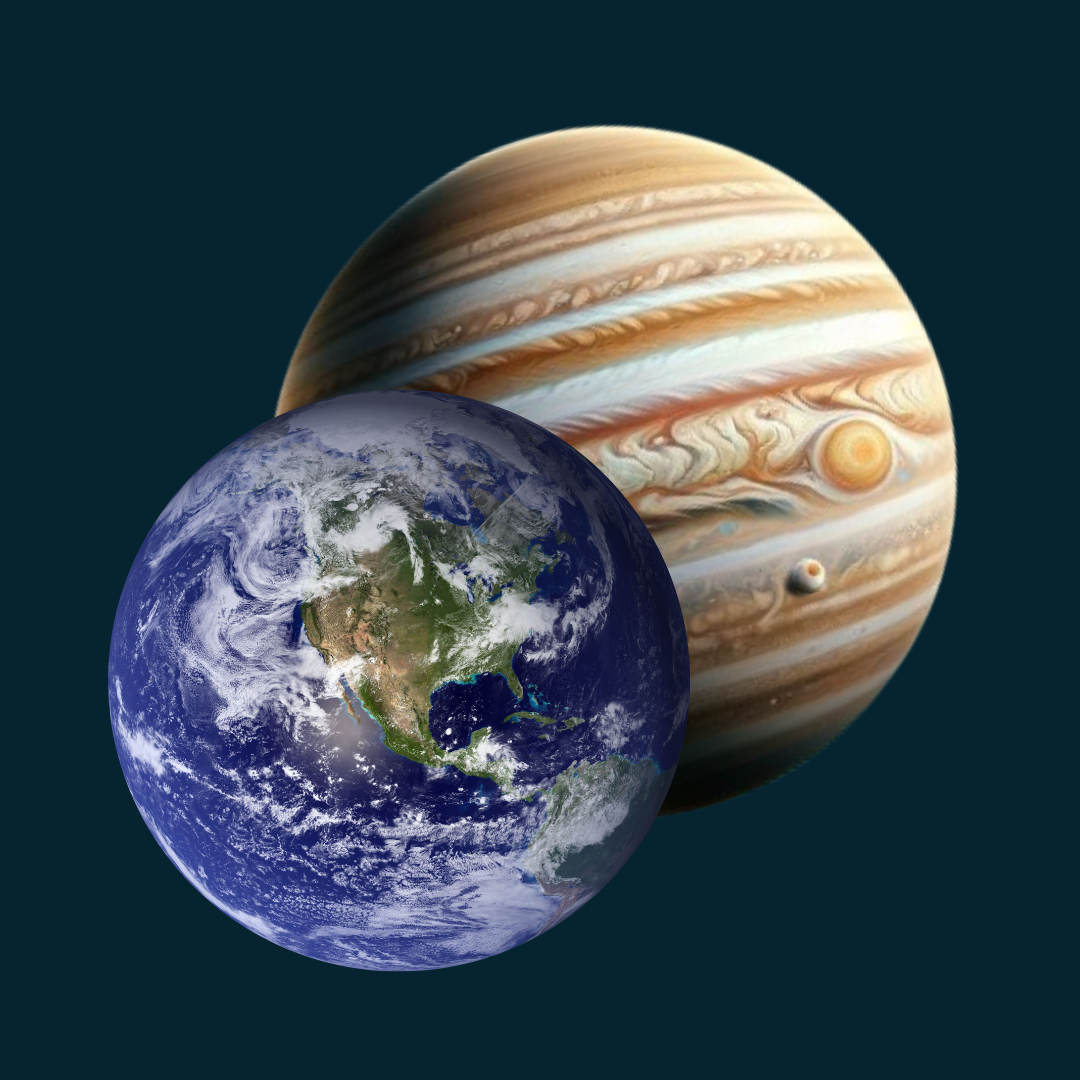
Discovered in 2016 by the European Southern Observatory using the radial velocity method, Proxima Centauri b is one of the most intriguing exoplanets due to its proximity to Earth, orbiting the closest star to our Solar System, Proxima Centauri, just 1.3 parsecs (or 4.24 light-years) away. This planet has captured the imagination of scientists and the public alike because of its potential to host conditions suitable for life. Let’s explore the planet's details and compare it to both Earth and Jupiter.
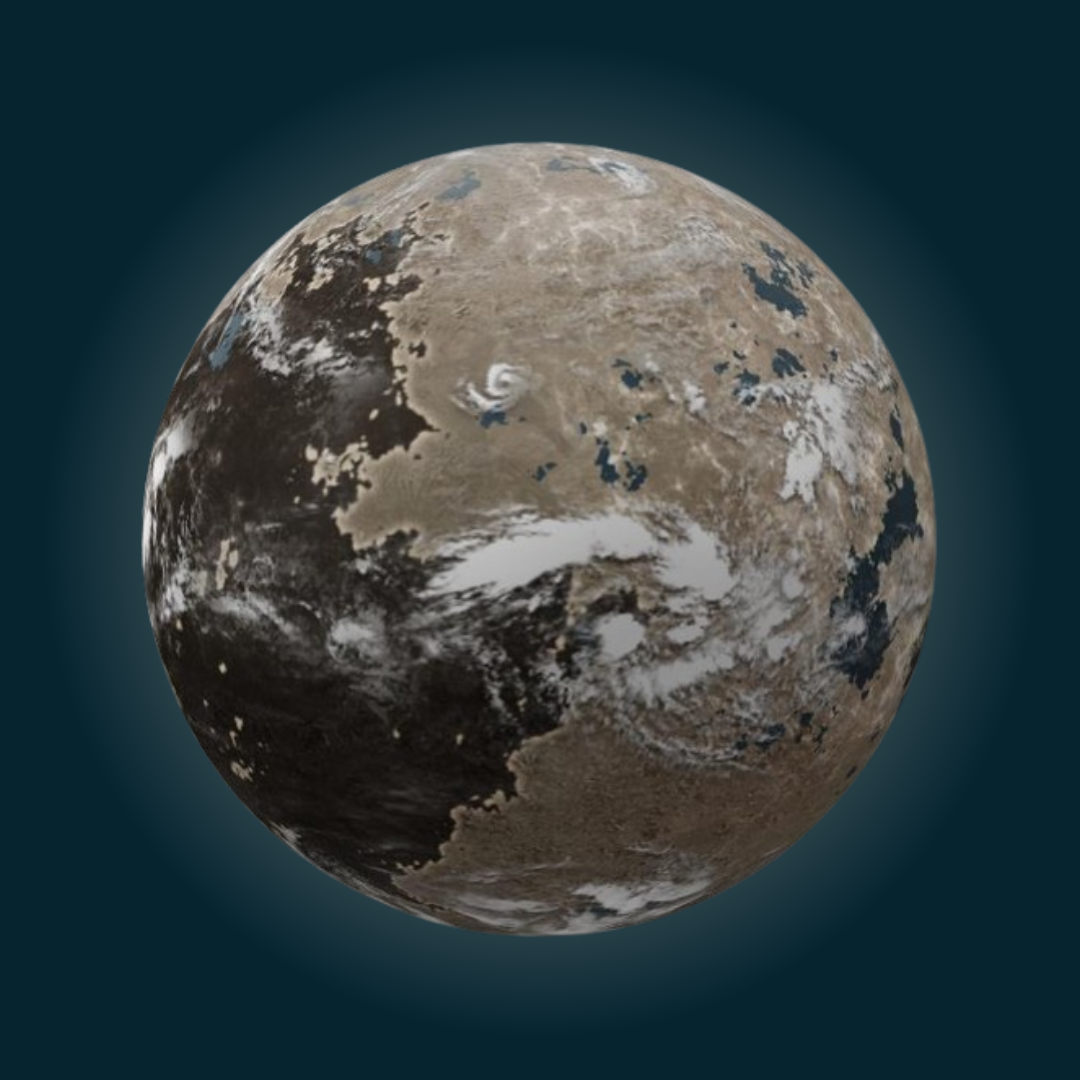
Proxima Centauri b is a rocky planet with a mass of 1.07 Earth masses and a radius of 1.03 Earth radii, making it very similar in size to Earth. It orbits its host star, an M5.5 V-type red dwarf , at a distance of 0.04856 AU. Despite this proximity, it has an equilibrium temperature of 234 K (-39°C), potentially allowing liquid water to exist. The planet completes an orbit in just 11.19 days, making a “year” less than two weeks long.
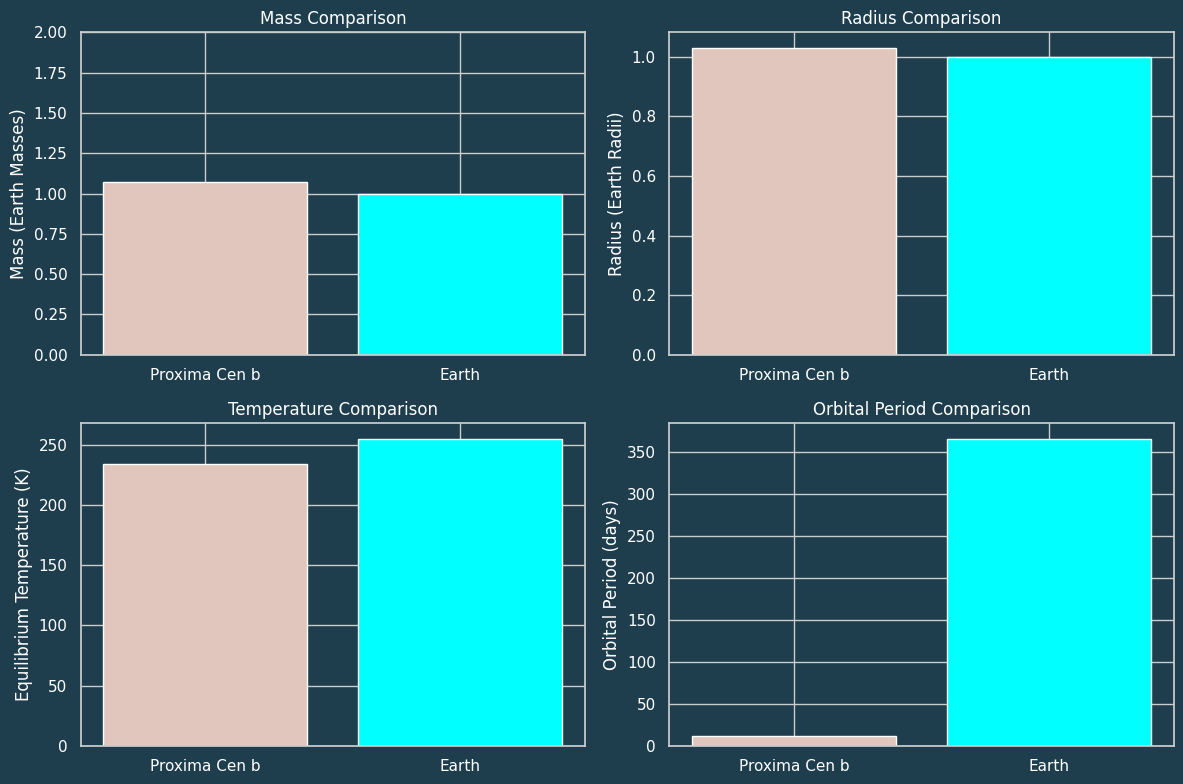
Proxima Centauri b is often compared to Earth due to its similar size and mass:
Mass and Size:
With a mass of 1.07 Earth masses and a radius of 1.03 Earth radii,
it is only
slightly larger and more massive than
Earth.
Orbital Characteristics: Orbits much
closer to its star at 0.04856 AU, with a year lasting just 11.19
days compared to Earth’s 365 days.
temperature: Has an equilibrium
temperature of 234 K, colder than Earth’s average of 288 K.
Environment: The proximity to a red
dwarf star introduces challenges such as stellar flares, affecting
potential habitability.
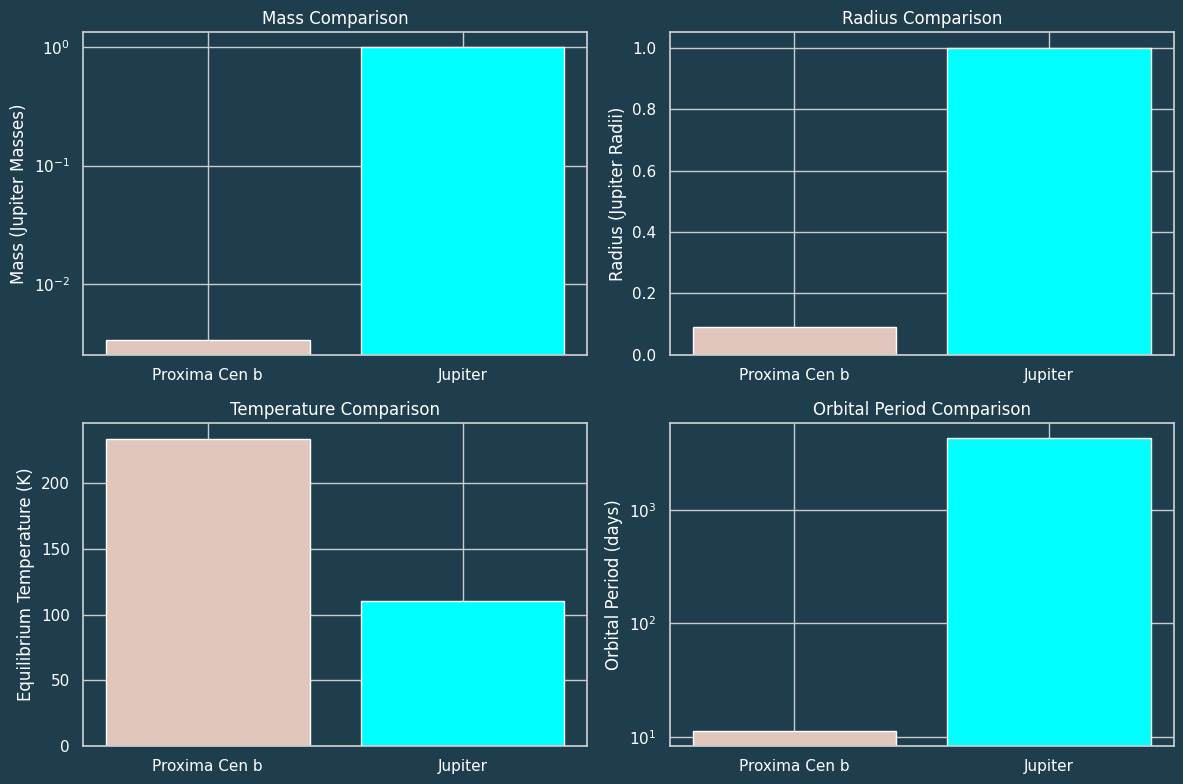
Proxima Centauri b is vastly different from Jupiter:
Mass and Size:It has a mass of 1.07
Earth masses, compared to Jupiter’s 317.8 Earth masses. Its radius
is 1.03 Earth radii, much smaller than Jupiter’s 11.2 Earth radii.
Orbital Characteristics:Orbits at
0.04856 AU with a period of 11.19 days, compared to Jupiter’s 5.2
AU and nearly 12-year orbit.
Environment: Proxima Centauri b
potentially has surface conditions similar to Earth, while Jupiter
is a cold gas giant with no solid surface.
Proxima Centauri b is a candidate for habitability, as it lies within the habitable zone of its star, where conditions could allow for liquid water. Our machine learning model highlights its potential as a site for life based on various favorable attributes.